


The Parkallen Community Garden is Growing in 2017

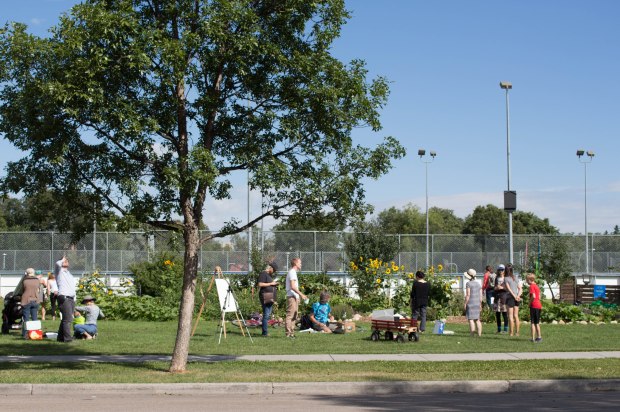
The Parkallen Community Garden has a new leader: Christine Watts. All ages and abilities are welcome to meet and garden with Christine at directed gardening bees on Saturdays, 2-4 p.m. and on Wednesday Evenings, 7-8 p.m.
As always, visitors are welcome anytime and self-directed gardening is encouraged. Pull some weeds, plant (and label) something, harvest a handful of something to munch on the spot or for your dinner. See what’s coming up.


Looks for the cheery bulbs planted by the Brownies in 2015 and 2016. We’re still growing in 2017.
Parkallen Community Garden has Pride
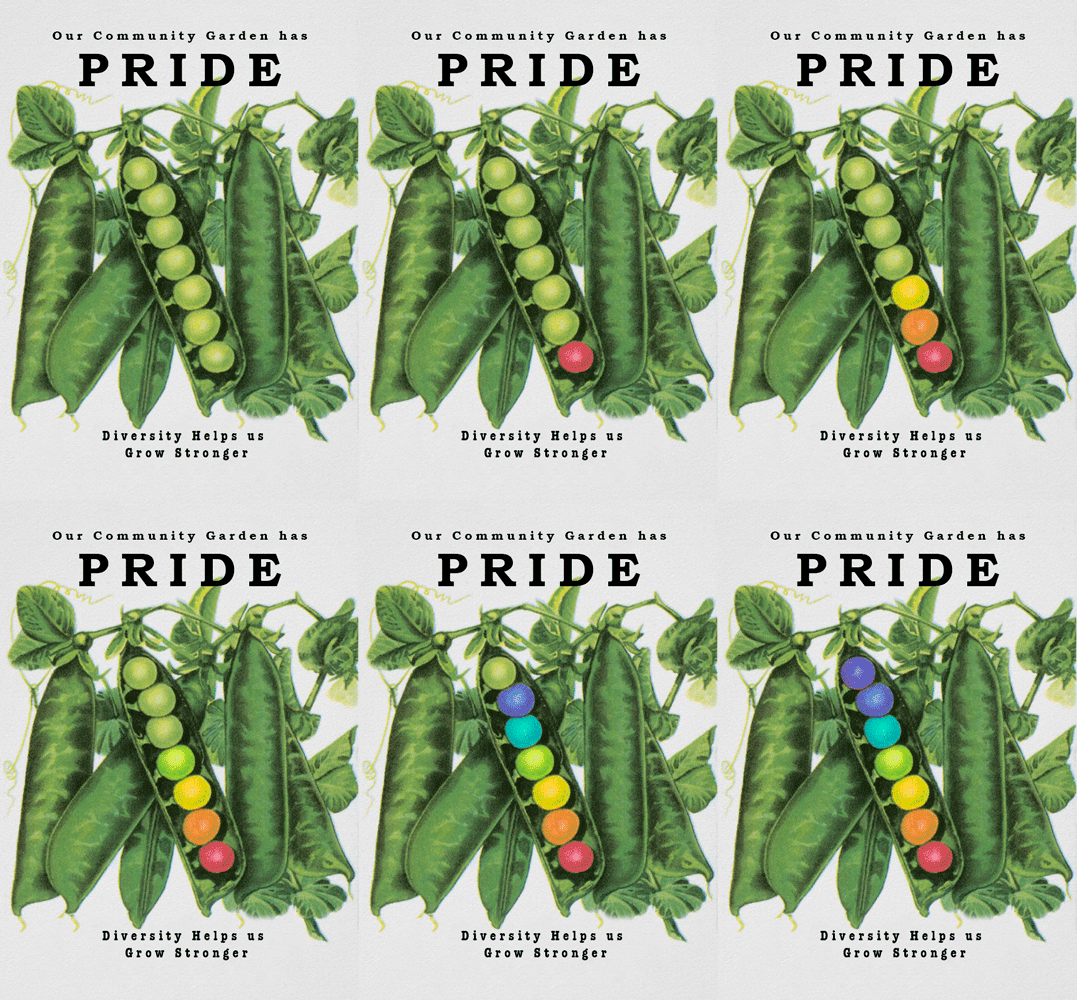
Because gardens are for peas and love.
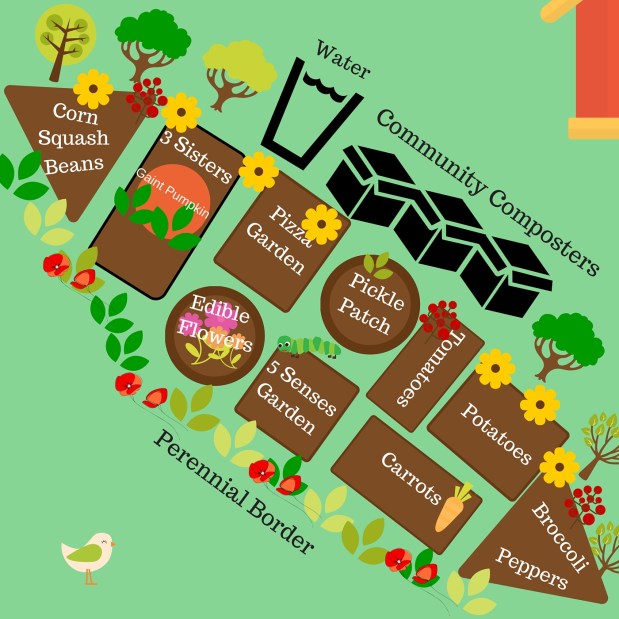
Our 2016 Growing Plan
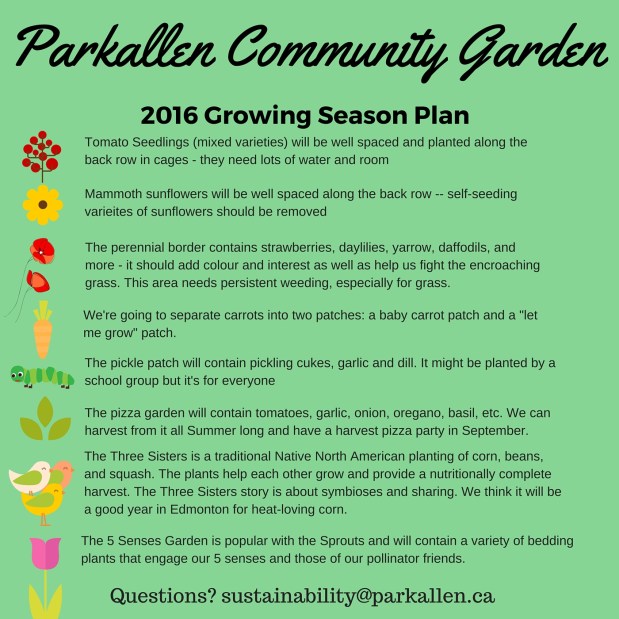
From our April 22, 2016 meeting where we discussed what worked last year, what didn’t, what we loved and what we liked, emerged this 2016 Growing Plan:
2015 Community League Showcase Award
Marlene Wurfel attended the 2015 Edmonton Federation of Community League’s Showcase Gala this summer to accept a spotlight award on behalf of the Parkallen Community Garden and the Parkallen Community League.

The all-ages gardening projects at the Parkallen Community Garden were 1 of 5 outstanding projects showcased by the Edmonton Federation of Community Leagues at their gala. The showcase included a story by CTV News’ Dez Melenka.
Wildlife Gardening at the Parkallen Community Gardening
Wildlife gardening means providing the conditions in your green space that are attractive to animals such as birds, butterflies, and bees. All animals need food, water, and a safe place to raise their young. Insects, which we need to pollinate our plants, and bats which pollinate and control pests, are not exceptions. Over the past several years, the Parkallen Community Garden has been adding feeders and nesting boxes for beneficial animals.

Above is a wren house (yet to be occupied), a watering station for birds and insects, and a large bird feeder with mess-free birdseed. Food + Shelter + Water = Wildlife Gardening.
The Parkallen Community Garden neighbours our outdoor community hockey rink.

16 feet high on a lamp post that lights our rink in the winter, we’ve hung a bathouse. It’s been constructed especially for this location by a local bat enthusiast and conservationist, Robert Danner. Little Brown Bats (our local species) are mammals and need a safe place to nurse their newborn babies in the spring time. A bat house serves as a nursery for moms and pups. There is a roof over-head but no floor — they enter from below and hang on to the rough interior surface with their claws. They huddle together for warmth and companionship. Bats only occupy a bat house in the springtime. Bat colonies over-winter elsewhere. Little Brown Bats eat mosquitoes, among other insects.
To answer some FAQ’s – No, the house doesn’t come with bats. After discovering the house, if they like it, local bats will move in next Spring or the Spring after that. Bats and people have been peacefully co-existing for all of human history, and bats have only recently developed a reputation for being scary and unclean. Little Brown Bats are extremely shy and would never attack humans or pets. They are wild animals though, and belong outside, not in our homes. Common sense tells us to never approach a sick or dead bat, and not to handle it’s feces. Learn more about bats in Alberta from Alberta Conservation.

This is our owl house, which we hope will be attractive to a Saw Whet owl. We’ve seen Great Horned owls in the neighbourhood, but they wouldn’t nest in a house like this. Great Horneds like the crotches of trees. Note that this nesting box has a large, owl-sized opening. If a local owl likes this home, she may lay her eggs in it next Spring.

We’ve lined the inside with wood shavings. Thanks, Robert! And hung it as high as possible under the eaves of our Community League, facing South. It’s a warm, protected location with a fairly clear view and a good swoop zone.

Thanks, Seth for installing it! We know that’s an unlikely an owl will use this home, but an owl house was high on a list of must-haves according to Parkallen School kids. You might like to see a baby saw whet owl on You-Tube.

We’ve also created a nest box or bee hotel for wild bees. Unlike honeybees, wild bees are solitary. They don’t swarm or sting, they are most likely to flee or retreat from a human. They’re very safe and are, in a healthy ecosystem, all around us. A wild mother bee would occupy a single tube (like the hollow stalk of a flower) to hatch her babies in. She needs a shelter to house her young, who she fetches pollen for all Spring. Like the other nest boxes, this one would be inhabited only when the mothers are raising babies, and not throughout the year. It doesn’t come with bees — but if they like it, they’ll use it to keep their babies sheltered and safe. Our garden needs pollinators to make food for us. Diverse pollinators and a diverse, stable food-supply go hand in hand. Learn more about building a bee hotel and about solitary bees from the National Geographic Society.

This nesting box may be a home for a native songbird, such as a a wren or a chickadee. Sparrows (a non-native species) are very aggressive nesters and good at crowding out native songbird species in Edmonton. Sparrows are like the dandelions of the bird world. This birdhouse has a restrictor over the hole. The hole-size restrictor will hopefully make the nesting box unattractive to sparrows, and perfect for chickadees or wrens. Native songbird species could really use a leg-up in YEG. When you’re building or buying a birdhouse or nesting box in Edmonton, remember, the hole-size matters. Do some research to attract the right bird to your yard.

Above is another nesting box for a native songbird hung high in a pine tree at the Parkallen Community Garden.
Wondering how we got these boxes up? We had a little help…

Thanks to the City of Edmonton for a lift when we needed one. And…

Thanks to all the Parkallen Community Gardeners who helped with the installations and especially to Brent Flesher (above) who will continue to monitor the nesting boxes. Thanks to the World Wild Life Fund for purchasing the nesting boxes as part of a Green CommUnity Award to Parkallen School. Thanks to Linda and Kathy at Parkallen School for their help administering the grant money. Thanks to the Parkallen Community League for supporting these projects in our community, and especially Anne Pratt for leading our community consultation.
These wildlife gardening projects and this blog post were created by Marlene Wurfel, Parkallen Community Garden Director. These nestboxes will not save the environment and the species they are meant to help out. But to build, install and maintain these nesting boxes for wild wings, I’ve learned so much about what wildlife needs in our urban landscape. It’s my hope that these projects will continue to teach Edmontonians about what our urban wildlife needs to survive and thrive.
Drop by the Parkallen Community Garden where visitors are welcome any time to see our “Nesting Boxes for Wild Wings” projects. Check out our bee condo for solitary bees, bat box for nursing moms and pups, owl box and bird houses for native songbirds.

Behold the Fearsome Carolina Reaper:
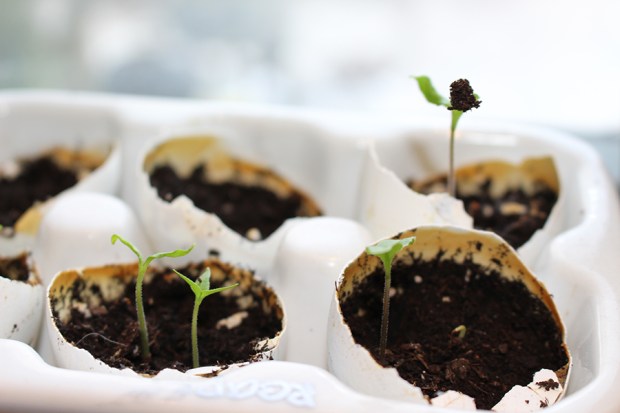
The hottest pepper in the world is getting ready for the 2015 growing season in Edmonton, Alberta
After All Danger of Frost in Parkallen’s Micro-climate
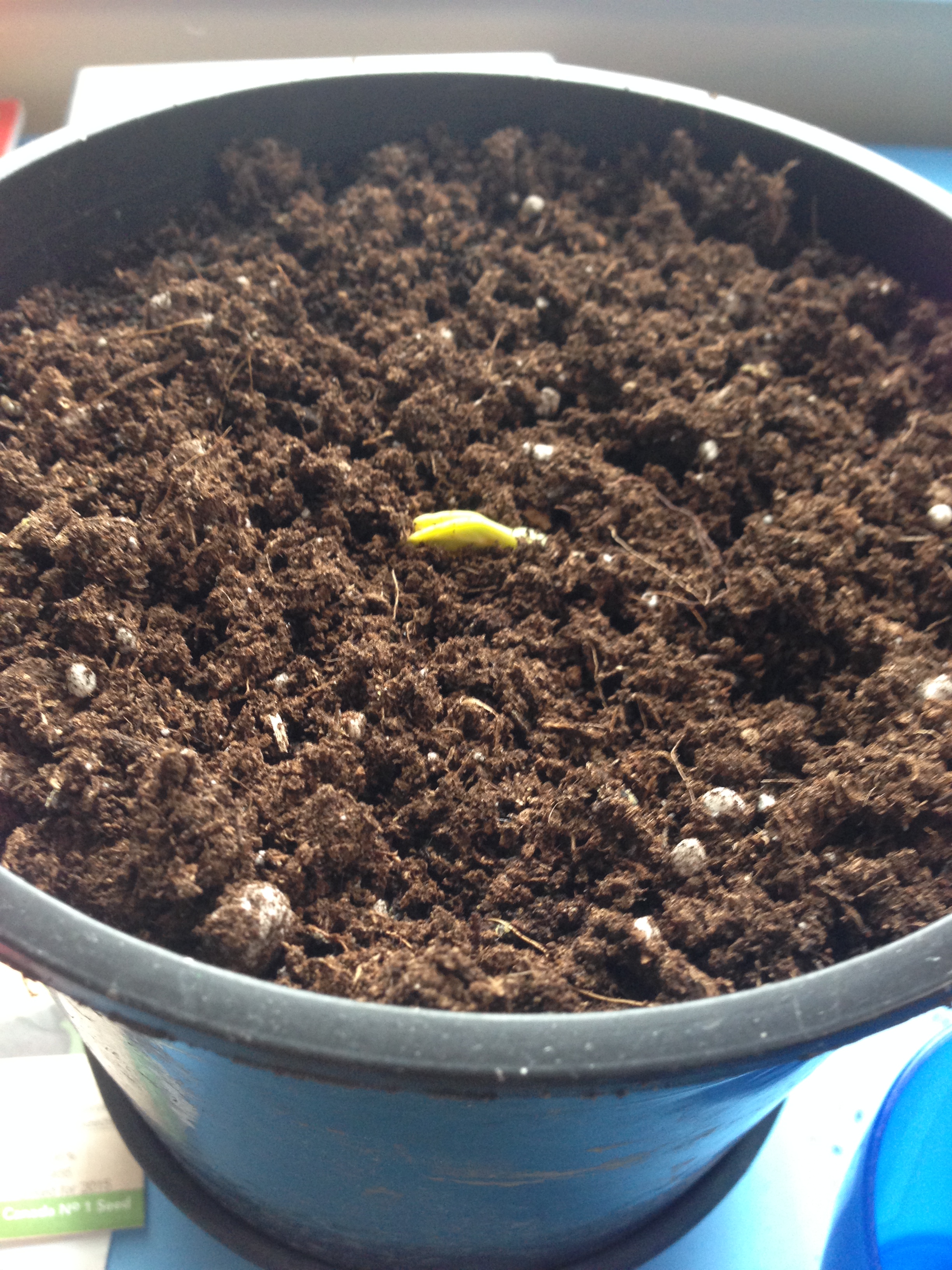
If you started seeds a couple of weeks ago, they should be peeking up through the soil by now. Some of the slower-to-germinate seeds, like peppers, will likely need another week.
A new-to-Parkallen gardener has asked me when the date to plant seedlings and sow seeds directly in the garden is in Edmonton? Seed packets are always telling us to sow “after all danger of frost is past.” When is that?
The May 24 Long Weekend is the Best Planting Date in Parkallen
I consider the May 24 long weekend the date to plant in Parkallen. Of course, this can vary from season to season so keeping an eye on the Spring temperatures is the thing to do if you’re keen to get a longer growing season in.
The Farmer’s Almanac says we’re good to go on May 7th in Edmonton, and Vesey’s Seeds‘ frost chart says the same. But Alberta’s Department of Agriculture has different first / last frost dates for different parts of Edmonton. Alberta Ag predicts the growing season as May 12th (Last Frost) to Sept 10th (First Frost) in Edmonton/Namao Airport. But for Edmonton/International Airport the season is shorter: May 24-Sept 10th.
I’ve noticed that Parkallen has it’s own micro-climate and it’s colder here than in most of Edmonton. The snow is long gone and tulips are blooming downtown and in the University area when the tulips are just beginning to peek up through the soil in Parkallen. Did you know that Parkallen used to be a lake?
What do you think? Do you agree with me that May 24 marks the beginning of Parkallen’s growing season?
Marlene Wurfel
Parkallen Community Garden Director
Gentlegardeners: Start your seeds
It’s that time of year:  Parkallen Gardeners: Start your seeds!
  Brent has special-ordered seeds from North Carolina where the PuckerButt Pepper Company claims to have cultivated the hottest pepper ever grown in the history of the world. Of course we’re willing to swap seedlings this Spring. What are you growing?

We’re on eggshells over here waiting for them to germinate…  Hope it’s not too corny of me to ask… but will you grow some extra of whatever you’re starting this year for the Parkallen Community Garden? If everyone grows a tomato plant or two, we won’t have to buy any. And, if you’d like to try something exotic like eggplant or … canteloupe … the PCG has sunshine to spare.
Gorgeous Garden

Isn’t it gorgeous? I think so. It’s a dry fall though, so remember to lug a watering can full of water from the rain barrels to our thirsty veggies when you can. The rain barrels are behind the shed against the hall.
Also, if you see a nice big artichoke, please take it home and introduce it to some melted butter.

 The Parkallen Community Garden